Craft & science
What two weeks of fire actually does
From rice-paddy clay to the moment a cup changes the taste of your tea — the process, the vocabulary, the chemistry, and how to look after the result.
The process
Five stages, roughly two years
01
Digging & weathering
Hiyose clay is cut from two metres beneath the rice paddies of Inbe, then stacked outdoors for several years so rain and frost break it down. Only then is it kneaded and aged again in a cool store.
02
Throwing & carving
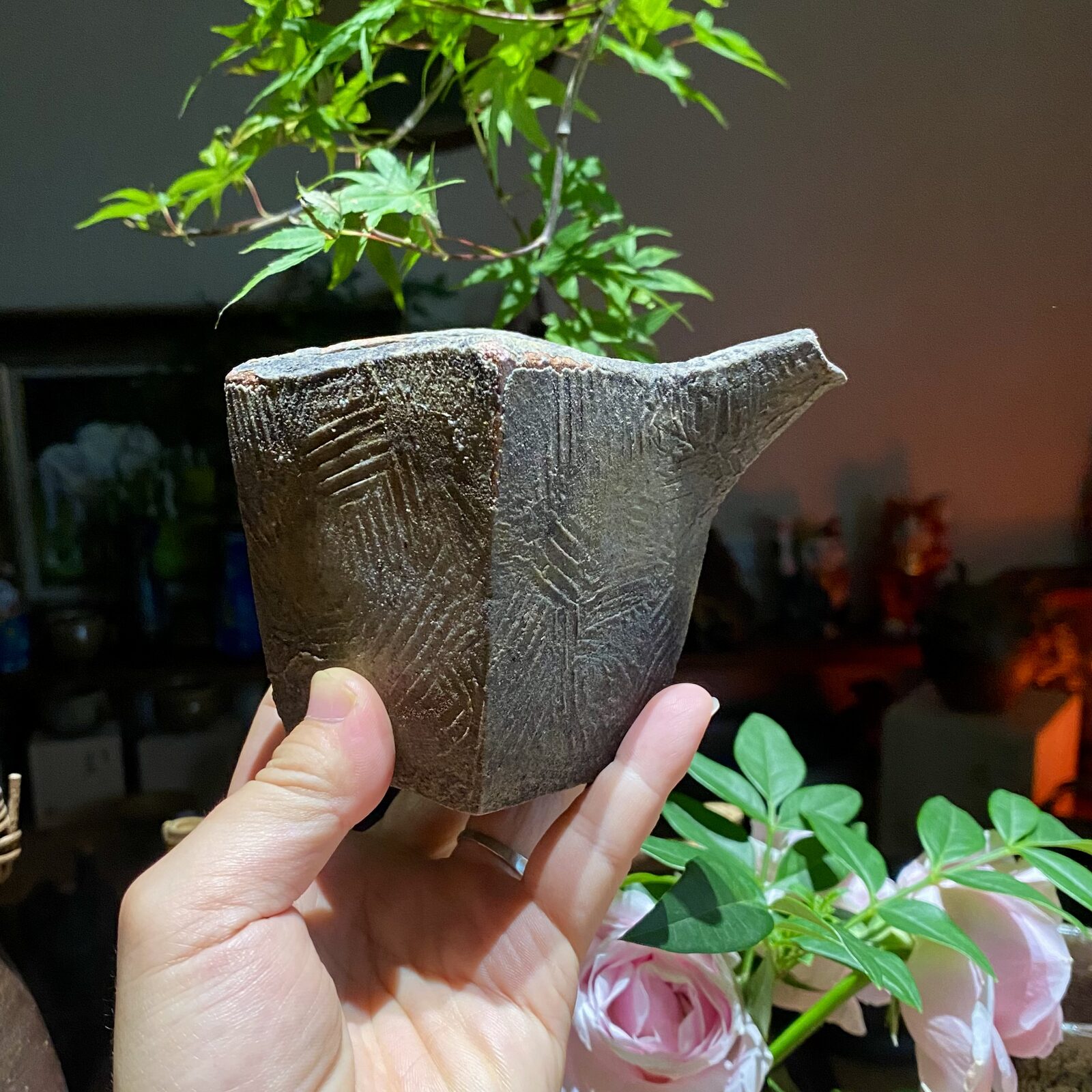
The potter throws on a kick wheel, then faceting, combing or carving is done while the clay is leather-hard. Bizen has no glaze to hide behind, so every tool mark stays visible for the life of the piece.
03
Loading the noborigama
Placement is the real decoration. Pieces near the firebox take heavy ash; pieces buried deep in the reduction zone can turn Ao-Bizen blue; pieces wrapped in rice straw take hidasuki scarlet lines; pieces stacked with a wad of clay take a botamochi disc.
04
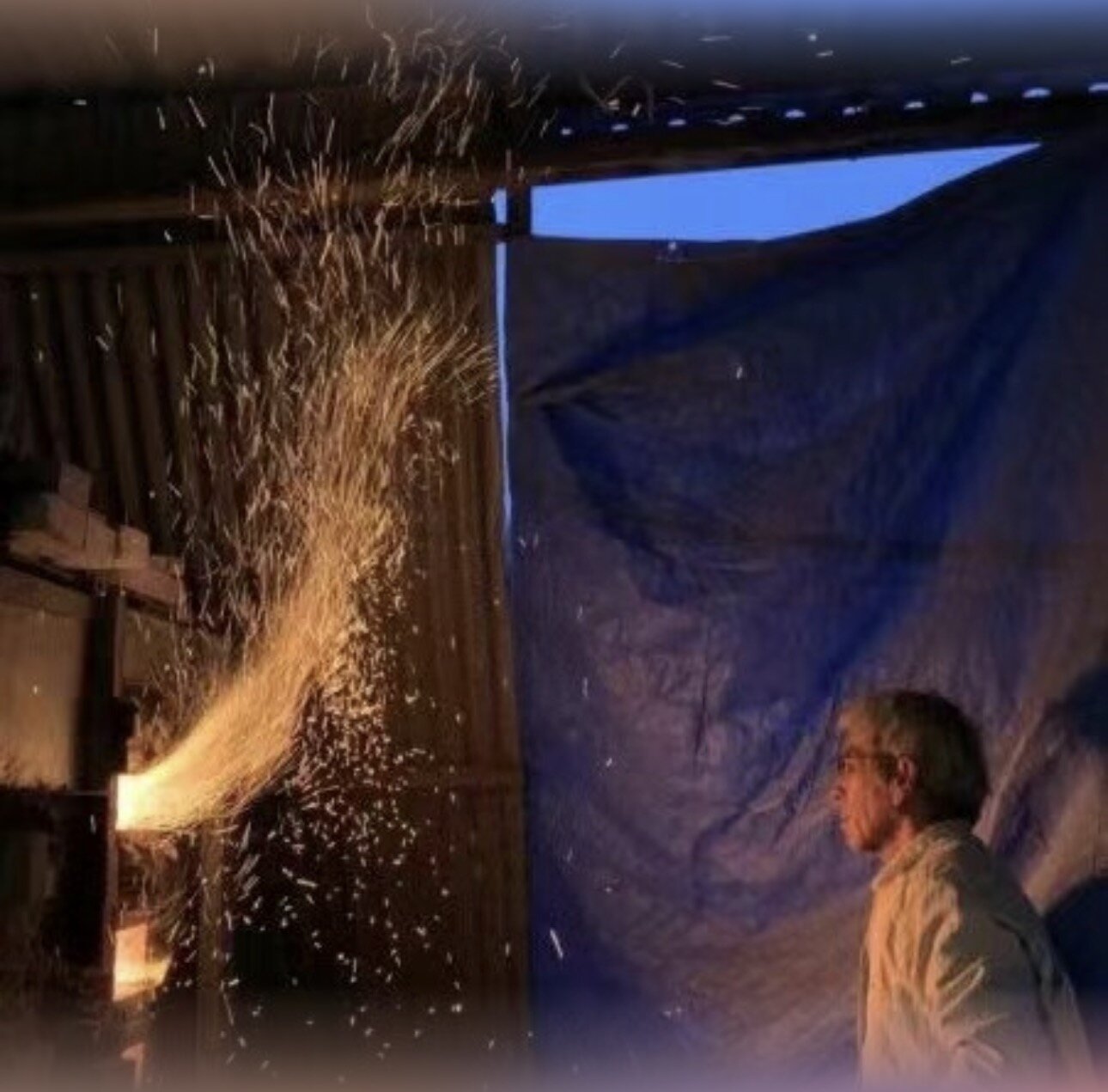
Fourteen days of red pine
The kiln is fed by hand around the clock for two weeks, climbing to 1,200–1,300 °C. Roughly two tonnes of pine per firing. Then it is sealed and left to cool for a further week.
05
Unloading & selection
A large firing may yield only a handful of pieces the maker will sign. Everything else is broken. What survives is fully vitrified stoneware — no glaze, no additives, nothing to leach.
Reading the surface
Six words worth knowing
Bizen collectors do not talk about colours. They talk about what the fire did.
窯変
Yohen
'Kiln change'. Any transformation caused by flame path and atmosphere, from ember orange to slate blue.
胡麻
Goma
'Sesame'. Airborne pine ash lands on the shoulder and melts into a natural, glassy speckle.
緋襷
Hidasuki
Scarlet lines left where rice straw was wrapped around the body before firing.
桟切
Sangiri
Grey to blue-black passages where charcoal buried the piece and starved it of oxygen.
牡丹餅
Botamochi
Pale round 'rice-cake' discs where one piece shielded another from the ash.
青備前
Ao-Bizen
Deep reduction blue. Rare, unrequestable, and the most collected of all Bizen effects.
“A glazed cup gives you the drink exactly as you made it. A Bizen cup gives it back to you slightly kinder.”
Why unglazed stoneware is used for tea
The science of flavour
Why the taste changes
No claim here requires belief. Porosity, iron content and surface area explain all of it.
Micro-porosity, not magic
Long wood firing leaves an open pore structure in the wall. A very small, continuous exchange of air with the liquid inside accelerates oxidation of harsh volatile compounds — the same principle that softens wine in a decanter, only slower and gentler.
Tannin and bitterness in tea
Iron in the clay body interacts with tea polyphenols, rounding astringency. Sencha tastes sweeter and less grippy; pu-erh loses its raw edge; roasted oolong gains body. The effect is strongest in an unglazed kyusu and a chawan.
Sake and spirits
Poured into a Bizen tokkuri and left ten minutes, sake reads noticeably rounder: alcohol burn drops, umami comes forward. Whisky and baijiu respond the same way. Bizen guinomi are prized in Japan for exactly this.
Flowers and water
Ikebana practitioners use Bizen vases because water in an unglazed body stays fresher and cut stems last longer. Nothing is added to the water; the vessel simply breathes.
Use & care
Seven rules, then forget the rules
- 01Rinse with hot water before the first use and let it dry fully. No detergent is needed.
- 02Season a new teapot by brewing the tea you intend to keep in it two or three times, discarding the liquor.
- 03Wash with hot water and a soft brush only. Detergent can be absorbed by the porous body.
- 04Air-dry completely, upside down, before putting it away — this prevents any musty note.
- 05Do not use the dishwasher, microwave or direct flame. Sudden temperature change is the only real risk.
- 06Small chips at the rim are normal in a wood-fired body and are traditionally repaired with kintsugi rather than discarded.
- 07Colour deepens with use. A Bizen cup at ten years old is worth more, to a collector, than the day it left the kiln.